Affordable Botanical Wall Art: Buyer's Guide

Finding botanical wall art that feels refined, calming, and timeless — without paying gallery prices — is absolutely possible.
The real challenge isn’t price. It’s knowing what actually makes art look “cheap.”
Most buyers focus on the sticker price and ignore the three real quality drivers: printing method, paper, and presentation. Miss those, and even $20 art can feel disposable. Get them right, and affordable art can rival designer interiors.
Let’s break this down clearly.
Why “Affordable” Often Ends Up Looking Cheap
Before talking about where to buy, we need to address why so many budget prints disappoint.
Cheap-looking wall art usually suffers from:
- Thin poster paper that curls or fades
- Flat colors from low-grade ink
- Poor framing (or no framing at all)
- Random sizing that doesn’t suit real interiors
Interior designers repeatedly emphasize that material quality matters more than the artwork itself — a principle echoed across design publications like Architectural Digest and Houzz.
So the goal isn’t to “buy cheap art.”
The goal is to buy art efficiently.
The Best Places to Buy Affordable Botanical Wall Art (That Holds Up)
1. Independent Artists & Curated Botanical Studios (Best Balance)
Buying from independent studios and niche botanical brands is the sweet spot most people overlook.
Why?
- Smaller collections = higher artistic cohesion
- Archival papers and pigment inks are common
- Designs are made for interiors, not algorithms
This is where brands like ArtoLeaf differentiate: museum-grade printing and framing, without gallery markups. Instead of selling posters, they sell finished wall pieces — which saves you from the framing trap that quietly doubles costs.
If you want to understand why archival printing matters, this explainer on giclée printing from CanvasDiscount explains how pigment inks dramatically extend color life and depth.
2. Etsy & Artist Marketplaces (High Reward, High Risk)
Etsy is often recommended — and for good reason. Many talented botanical artists sell beautiful work there, as highlighted by artist-led reviews on June Hunter Studio.
But here’s the blind spot most buyers miss:
Etsy quality varies wildly.
To avoid disappointment:
- Read material descriptions, not just reviews
- Look for “archival paper” or “pigment ink”
- Be cautious of ultra-low prices with no framing options
Done right, Etsy can deliver stunning pieces. Done blindly, it delivers poster paper with nice photography.
3. Print-On-Demand Platforms (Convenient, Not Premium)
Platforms like Society6 and Fine Art America offer accessibility and volume. They’re convenient — but rarely exceptional.
Most POD platforms:
- Print on standard paper by default
- Upsell framing separately
- Prioritize scale over curation
They’re fine for casual decor, but they rarely match the depth or finish of curated botanical collections designed for calm, biophilic interiors — something design-focused brands emphasize far more intentionally.
4. Mass Retailers (Cheap Price, Hidden Costs)
Stores like IKEA and big-box retailers do offer botanical prints at very low prices (examples frequently cited on IKEA).
But here’s the truth:
- Paper quality is thin
- Colors are flat
- Frames are usually entry-level
Once you reframe or replace faded prints, the “cheap” option often costs more than buying quality once.
What Actually Makes Botanical Wall Art Look High-End
This is where most buyers miss the opportunity.
Printing & Paper
- Archival or fine-art paper (not poster stock)
- Pigment-based inks (not dye inks)
- Matte or luster finishes for reduced glare
These factors are why giclée prints are considered the gold standard, as explained by CanvasDiscount.
Framing (The Silent Deal-Breaker)
A $25 print in a good frame looks intentional.
A $100 print in a bad frame looks cheap.
Design guidance from Houzz consistently emphasizes:
- Neutral frames (wood, black, soft white)
- Matting for visual breathing room
- Consistency across a wall
This is why framed botanical art — not loose prints — consistently performs better in styled interiors.
How to Buy Smart Without Overpaying
Here’s the strategy most people don’t follow — and should:
- Buy fewer, better pieces
One well-placed botanical artwork beats five random posters. - Prioritize finish over size
A medium framed print with depth beats oversized flat posters. - Choose timeless botanicals
Leaves, stems, and florals age better than trend-based illustrations — a principle echoed in biophilic design research featured by Architectural Digest. - Avoid “DIY framing tax”
Cheap prints become expensive once framing is added. Pre-framed art often wins financially.
Why Botanical Art Is the Safest Affordable Art Category
Botanical art has unique advantages:
- Naturally calming (biophilic design)
- Neutral color palettes
- Works across modern, Scandinavian, minimalist, and classic interiors
Research consistently shows that nature-inspired visuals reduce perceived stress — a reason botanical wall art continues to dominate interior design coverage on platforms like Architectural Digest.
This makes botanical art a low-risk, high-impact investment for your home.
Affordable Museum-Grade Botanical Art
Premium archival quality without high gallery markups, starting at accessible price points.
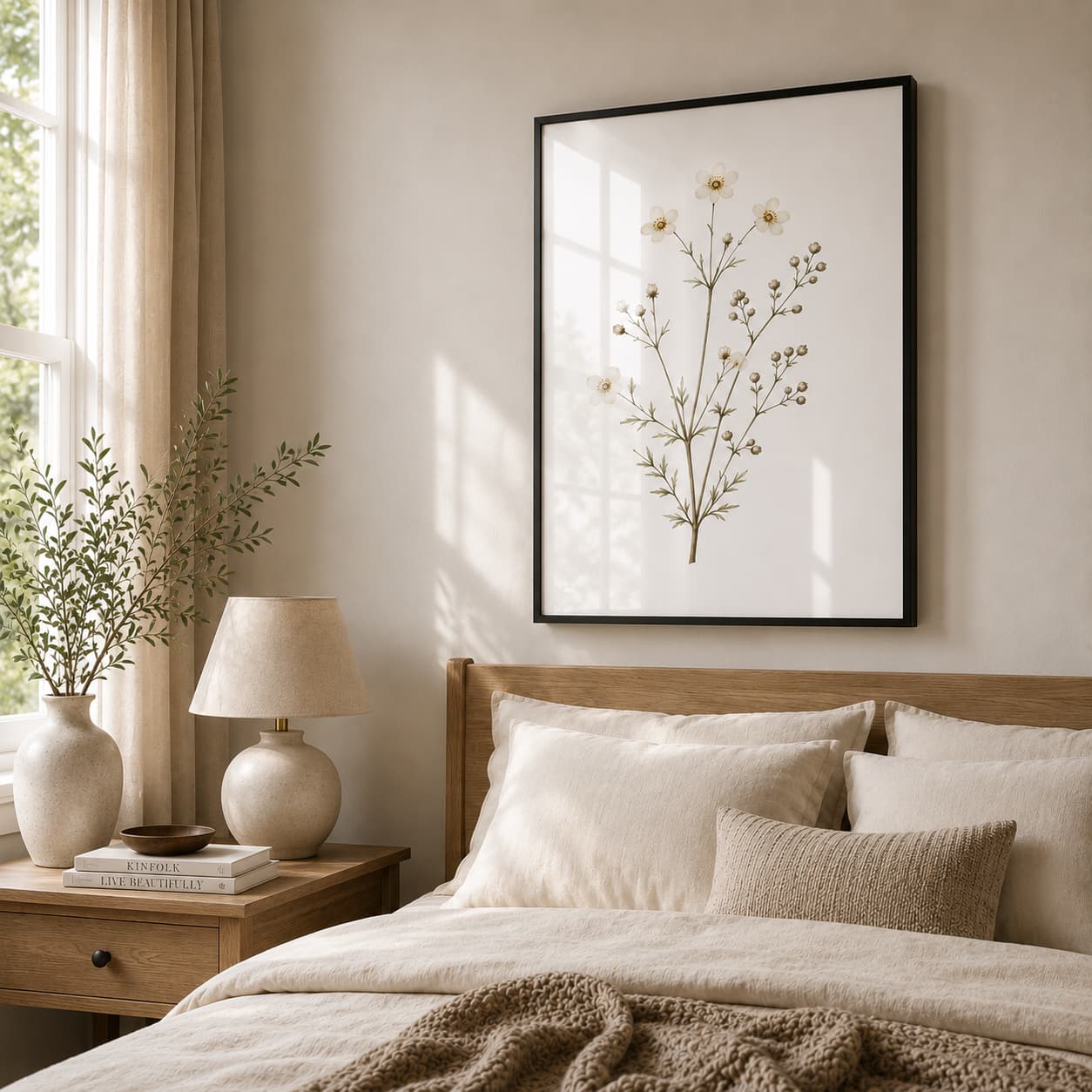
White Cosmos Botanical Framed Wall Art – Soft Minimalist Floral Illustration
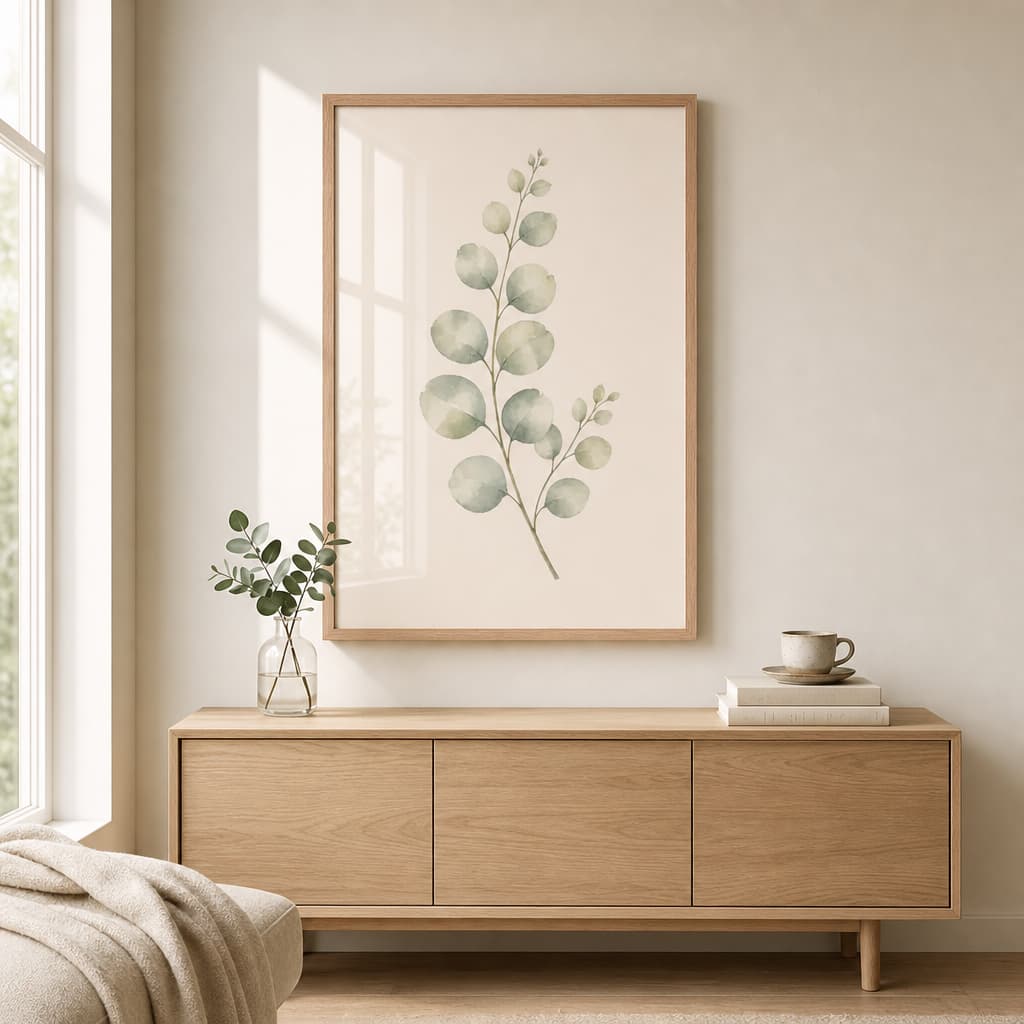
Eucalyptus Branch Framed Botanical Wall Art — Minimalist Watercolor
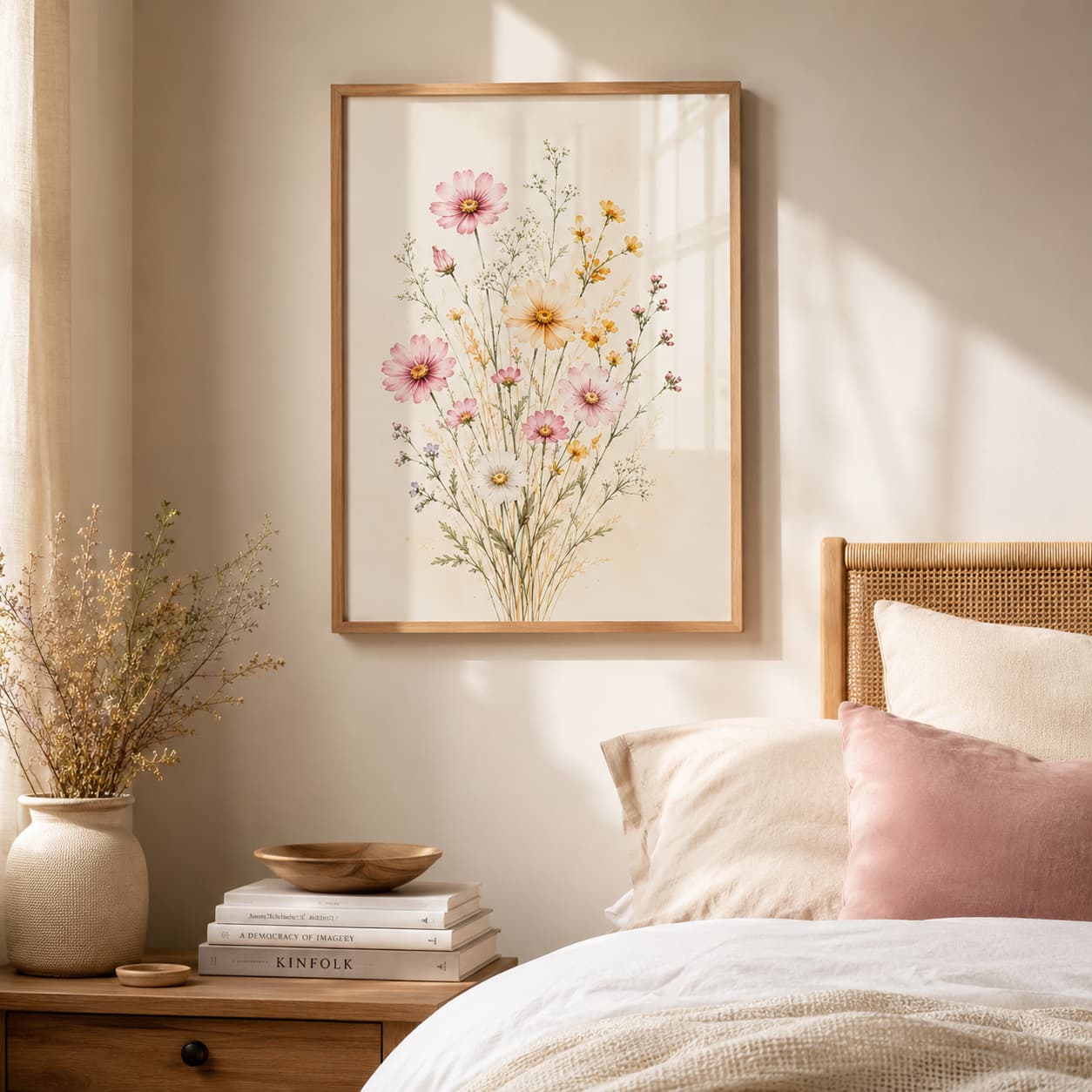
Wildflower Meadow Framed Wall Art – Soft Watercolor Floral Decor for Living Room or Bedroom
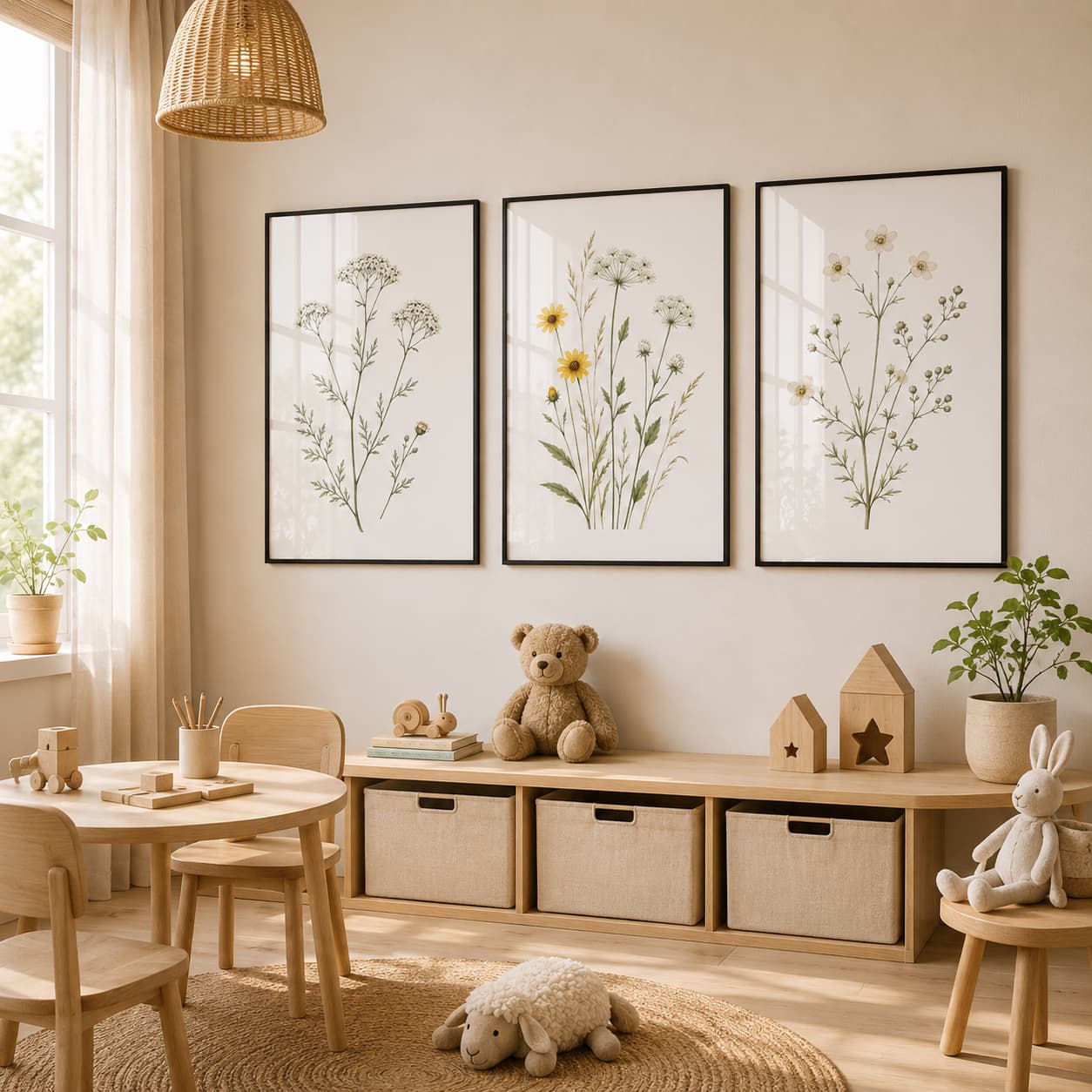 Set of 3