Biophilic Design at Home with Botanical Art

In an era dominated by screens, notifications, and urban hustle, our domestic environments have never been more critical to our mental well-being. For years, the design world was ruled by the cold, sterile lines and cool grays of 2010s minimalism. But a profound shift is occurring. Modern interior design has officially entered a softer, more restorative era. Sharp angles are being replaced by gentle curves, and clinical palettes are giving way to warm, earthy wood tones and soothing greens.
At the forefront of this movement is biophilic design—the practice of intentionally connecting our indoor spaces with the natural world. It is not merely a passing decor trend; it is an evidence-based design philosophy rooted in our evolutionary biological need to feel close to nature.
Here is a guide to understanding the science behind biophilic design, why looking at botanical art actively lowers your stress levels, and how you can adopt this beautiful trend in your own home with zero maintenance.
The Science of Biophilia: Why Nature Soothes the Mind
The word biophilia literally translates to a "love of life". First popularized by biologist Edward O. Wilson, the biophilia hypothesis states that humans possess an innate, evolutionary connection to natural systems. Because our species evolved in adaptive response to the natural world rather than artificial environments, concrete and digital isolation can elevate our baseline physiological stress.
When we introduce natural elements into our built environments, our bodies experience a measurable relaxation response. Environmental psychologists point to two leading scientific theories to explain how nature-inspired decor heals our minds:
1. Attention Restoration Theory (ART)
Developed by Rachel and Stephen Kaplan, ART explains that daily screen time and urban settings require intense, exhausting "directed attention" to filter out distractions. This lead to cognitive fatigue and irritability.
In contrast, natural patterns—like the self-repeating geometry of leaves and branches—engage our "soft fascination". Soft fascination captures our attention effortlessly, giving the prefrontal cortex a restorative visual rest break to rest and recover.
2. Stress Recovery Theory (SRT)
Formulated by researcher Roger Ulrich, SRT establishes that viewing unthreatening natural scenes quickly triggers the parasympathetic nervous system, lowering physiological arousal.
Peer-reviewed medical research has demonstrated that exposure to high-quality natural imagery has profound restorative outcomes. In controlled clinical environments, viewing nature-themed artworks resulted in:
- A statistically significant reduction in systolic blood pressure ($p < 0.05$).
- A notable increase in alpha wave power spectral density (PSD) across the brain's frontal, central, and occipital regions ($p < 0.05$), indicating a state of deep, alert relaxation and cognitive comfort.
The Hidden Stress of Living Greenery
When people first discover biophilic interior design, their immediate instinct is often to build an indoor jungle. They envision cascading living green walls and delicate potted plants in every corner.
But in reality, maintaining living botanical systems comes with significant challenges :
- Constant Upkeep: Living plants require precise daylight, strict temperature controls, and scheduled watering.
- Allergens and Mold: High-density soil and living green systems can accumulate dust, attract insect pests, and introduce moisture or mold into drywalled spaces.
- Visual Stress: When living plants begin to droop, wither, or die due to insufficient light or busy schedules, they lose their restorative power. Instead, they become a visible reminder of neglect, actively raising your stress levels.
This is why top interior designers utilize Natural Analogues—indirect representations of nature, such as organic textures, sustainable woods, and museum-grade botanical art. By placing beautiful, botanically precise prints on your walls, you enjoy all the scientifically proven stress-reduction benefits of biophilia with absolutely zero maintenance.
How to Style Your Space with Premium ArtoLeaf Art
At ArtoLeaf, we merge digital innovation with premium craftsmanship to create botanical wall art designed specifically for modern, wellness-focused interiors. Every print starts as a visionary digital concept, hand-refined by specialized designers to achieve perfect composition, tone, and botanical detail.
To bring the healing power of biophilia into your home, follow these professional styling guidelines:
1. Apply the 60-75% Sizing Rule
A common interior design mistake is the "Proportion Heuristic"—hanging artwork that is too small for the wall. Empty walls function as expansive visual fields that directly impact the nervous system; when art is too small, your eyes must scan the wall constantly, creating subtle, unconscious tension.
To build a calming visual anchor, your framed art should occupy roughly 60% to 75% of the width of the furniture below it (such as a bed, sofa, or console table).
ArtoLeaf SizeBest PlacementPsychological and Visual Utility
8" x 10"
Shelves, desk nooks, vanity walls
Focuses attention on intricate watercolor details
12" x 18"
Bedroom dressers, reading chairs
Softens transitional spaces, providing a gentle rest break
16" x 20"
Dining rooms, home office feature walls
Restores attention in workspaces and balances mid-sized furniture
24" x 36"
Living room walls, high-ceiling entryways
Serves as a primary room anchor and coordinates open floor plans
2. Select Your Botanical Subjects Wisely
Different plant forms evoke unique emotional responses. Sage green, eucalyptus, and soft watercolor leaves feature cool, low-saturation tones that are biologically proven to lower physical arousal and encourage deep, restorative rest.
Explore some of our most-loved watercolor designs:
- (https://artoleaf.com/products/eucalyptus-branch-framed-botanical-wall-art-minimalist-watercolor) A graceful, sweeping composition that functions as an effortless focal point in bedrooms and quiet home offices.
- (https://artoleaf.com/products/layered-sage-leaves-framed-botanical-wall-art-minimalist-watercolor) Featuring soft sage tones, this piece is designed to blend seamlessly into Scandinavian and Japandi interiors.
- (https://artoleaf.com/products/eucalyptus-stem-framed-botanical-wall-art-minimalist-watercolor) A single, centered botanical form that speaks through stillness, simplicity, and minimalist sophistication.
- (https://artoleaf.com/products/eucalyptus-botanical-framed-wall-art-set-of-3-minimalist-watercolor-collection) A curated, pre-styled set of three matching designs that work in visual harmony. This set is the perfect, ready-to-hang solution for transforming large living room walls or open-plan spaces.
3. Match Frame Materials to Your Wellness Goals
How your brain processes botanical art is deeply influenced by the frame surrounding it. At ArtoLeaf, we offer three custom-crafted, semi-hardwood frames to match your aesthetic goals :
- Natural Red Oak: Choose natural oak frames for workspaces and offices. The warm, organic wood grains provide a grounded sensory experience, supporting focus and relieving mental fatigue.
- Sleek Black: Black frames create a bold, definitive visual border. This triggers "figure-background modulation" (FBM) in your visual cortex, boosting contrast and making the botanical watercolor hues look richer and sharper.
- Clean White: Perfect for light-colored walls, white frames soften the borders of the artwork to create a clean, breezy Scandinavian or coastal look that supports relaxation.
Transform Your Home into a Peaceful Sanctuary Today
Your home should be a sanctuary from the outside world—a place designed to soothe your mind, restore your focus, and support your physical well-being. By combining the natural beauty of ArtoLeaf's curated botanical prints with the science of correct visual scale, you can build a restorative, nature-inspired space effortlessly.
ArtoLeaf is rated 4.9/5 by modern home collectors across North America. Every piece is printed on demand on ultra-premium luster photo paper, expertly framed in lightweight ayous wood, and shipped directly to your door from our local US and Canadian fulfillment centers to minimize transit times and reduce our carbon footprint.
Enjoy free shipping on all orders over $99 in the USA and Canada, backed by our 30-day, hassle-free satisfaction guarantee.
Bring Biophilic Art into Your Home
Curated eucalyptus and sage green studies designed to reduce stress and foster natural calm.
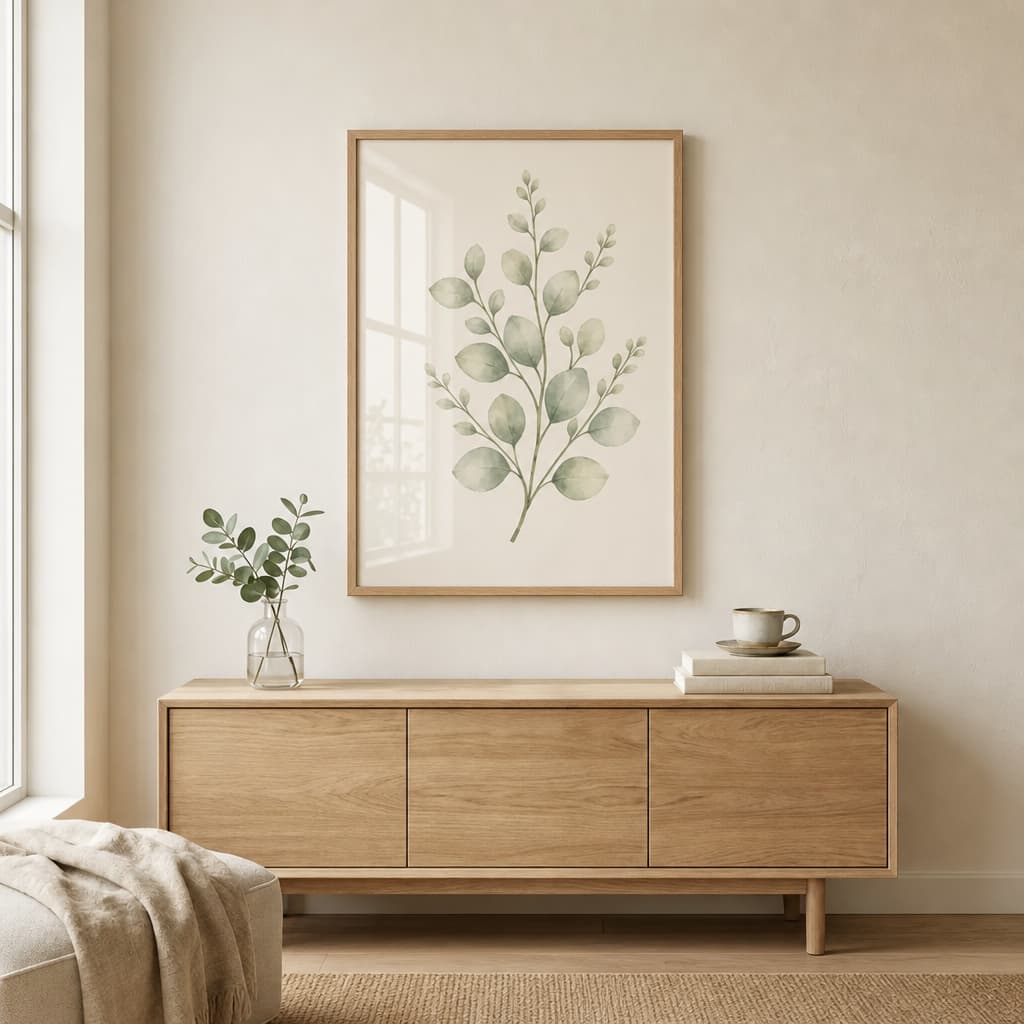
Layered Sage Leaves Framed Botanical Wall Art — Minimalist Watercolor
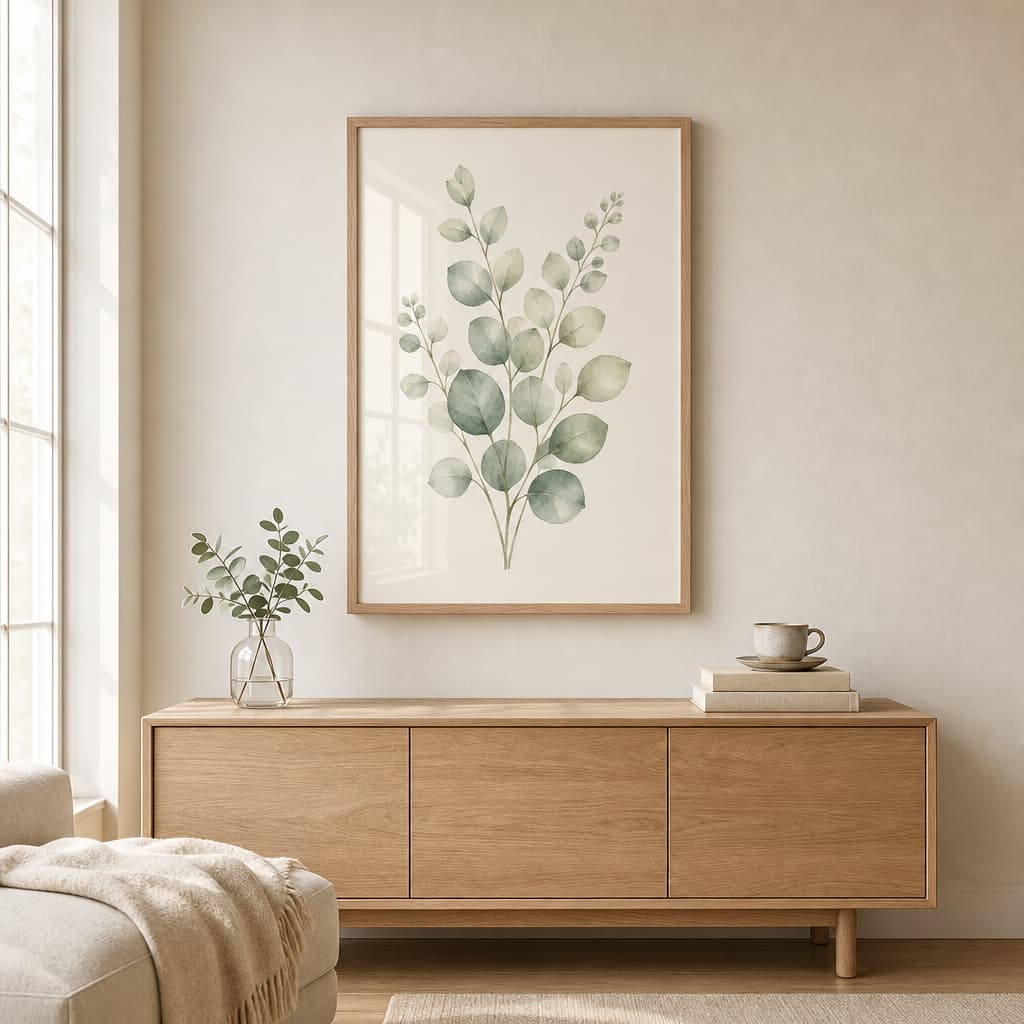
Eucalyptus Stem Framed Botanical Wall Art — Minimalist Watercolor
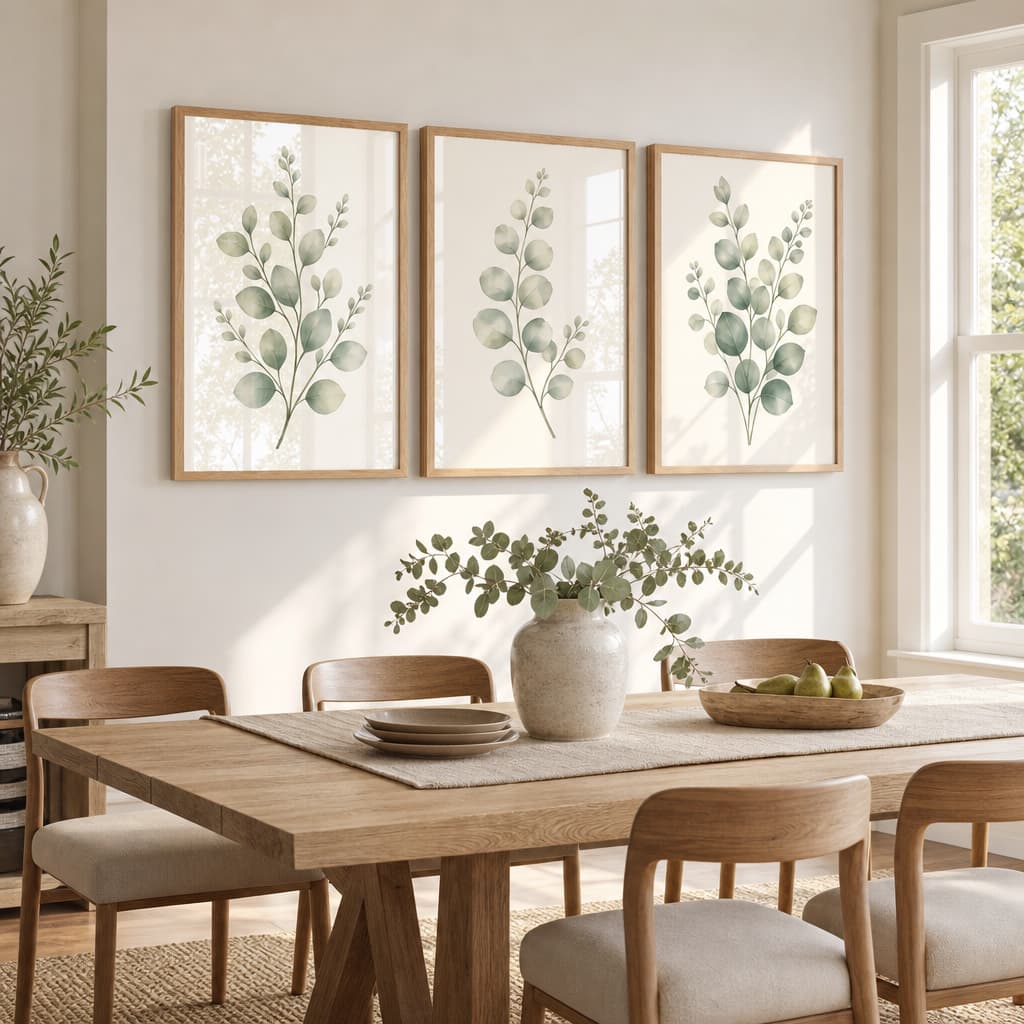 Set of 3
Eucalyptus Botanical Framed Wall Art Set of 3 — Minimalist Watercolor Collection
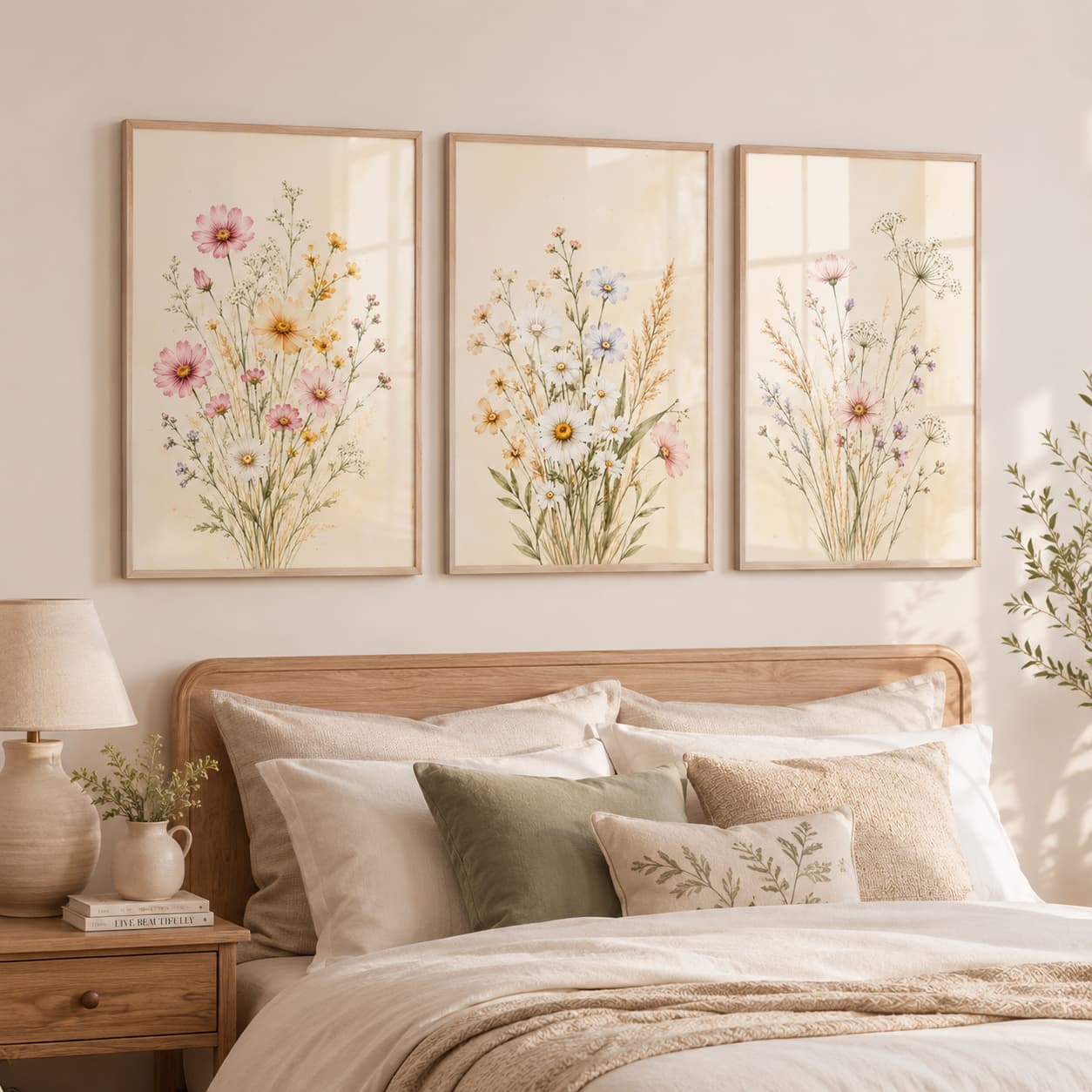 Set of 3