Is Framed Wall Art Worth It for Renters?

If you've ever stood in front of a blank rental wall, calculator-brain fully engaged, asking "should I actually spend real money on art when I might move in a year?" — you're not alone. It's a fair question. But it's also the wrong one.
The right question isn't will I lose this when I move. You won't — art moves with you, walls don't. The right question is: will this piece still look good, hold up physically, and feel worth it three apartments from now? That's a question of materials and style, not tenancy status. Here's how to actually think it through.
The Real Question Isn't "Will I Lose It" — It's "Will It Last"
Renters tend to assume that anything nice they buy is somehow tied to the apartment they're in right now, and that moving means starting over. But unlike paint, built-ins, or anything bolted to a wall, art is one of the few decor categories that's fully portable by design. You take it with you. Every time.
So the hesitation isn't really about ownership — it's about whether spending more upfront makes sense for something temporary. Which brings up the actual math.
Breaking Down the Cost Per Year
Say you buy a framed botanical print for around $150. If it stays in good shape across three apartments over five years, that's $30 a year — less than a coffee subscription, for a piece you see every single day.
Now compare that to the cheaper alternative a lot of renters default to: a $20 poster or peel-and-stick print that gets damaged in a move, fades within a year, or just stops feeling right in the next place. Buy that twice over the same five years and you've spent close to the same amount — except you're left with nothing to show for it and two pieces in a landfill instead of one piece on your wall.
This is the part of the "is it worth it" conversation that almost never gets talked about. Most advice for renters focuses on how to hang things without losing your deposit. Worth knowing, but it skips the bigger question: what you're actually getting for the money over time.
What Actually Determines Long-Term Value
Not all art is built to survive multiple moves. Two things separate a piece that lasts from one that doesn't.
Materials That Survive Multiple Moves
Cheap inkjet prints fade, yellow, and pick up sun damage fast — especially in apartments with big, light-filled windows, which is exactly where renters tend to want a statement piece. Archival-quality paper is built to resist that fading for decades, not months.
Frames matter just as much. Particleboard or thin plastic frames warp, chip at the corners, and rarely survive a second move intact. Solid wood frames flex less, travel better in a moving box, and don't develop that slightly-off look after one bump against a doorframe.
Style That Doesn't Date Itself
The other risk with cheaper, trend-driven art is that it can start to feel dated right as you're settling into a new place — which means you're not just replacing damaged pieces, you're replacing pieces you've simply grown tired of. Botanical and nature-inspired prints tend to dodge this problem. Leaves, branches, and botanical studies aren't tied to a specific design moment the way a lot of graphic or pattern-based art is, so they tend to keep working across different rooms, color schemes, and years.
How to Move Botanical Art Without Damage
This part gets covered extensively elsewhere, so just the essentials: lightweight framed pieces travel far better than anything under glass, and wrapping corners before a move prevents most of the damage that actually happens in transit. For hanging in a rental itself, Command-style strips rated for your frame's weight are the standard renter-safe option — just follow the weight limits on the package rather than guessing.
When It's Not Worth It
In fairness, there are situations where spending more on art doesn't make sense:
- You're somewhere for under six months. The cost-per-year math only works out if you're actually keeping the piece for a while.
- You're moving internationally with strict luggage limits. Shipping or checking framed art adds cost and risk that may not be worth it for a short posting.
- You're subletting or in a situation where you genuinely don't know what's next. If your living situation itself is unstable, it's fine to wait.
Outside of those cases, the "I might move" excuse doesn't hold up to the actual math — moving is the reason the art travels with you, not the reason to skip buying it.
FAQ
Does wall art increase a rental's resale or rental value? No — that's not really the relevant value here. Wall art isn't a property investment; it's a personal one. It increases how much you enjoy living somewhere, which matters even (especially) when the place isn't yours.
Will moving damage framed prints? Properly packed, lightweight framed pieces hold up well across multiple moves. The bigger risk is heavy glass-front frames, which are both harder to pack safely and more prone to cracking.
Is it better to buy cheap art and replace it, or invest once? Over a multi-year time horizon, buying once usually costs about the same as replacing cheap pieces repeatedly — except you end up with something you actually like at the end of it.
Can I take wall art with me if I move internationally? Smaller framed pieces can usually be packed and checked or shipped. For larger pieces, factor shipping cost into your decision before buying.
The Bottom Line
The "investment" framing renters usually apply to wall art is the wrong lens. This isn't about resale value or property equity — it's about cost-per-use over the years you'll actually own the piece, not the years you'll spend in any one apartment. Judged that way, a well-made botanical print with archival paper and a solid frame usually wins, because it's the version of "investment" that's actually under your control: durability and style, not your lease.
If you're ready to find a piece built to move with you, browse framed botanical prints made with archival paper and solid wood frames — or see how our pieces are made before you decide.
Versatile, Lightweight Framed Prints for Any Wall
Pre-installed sawtooth hangers and shatterproof Acrylite make moving and restyling simple.
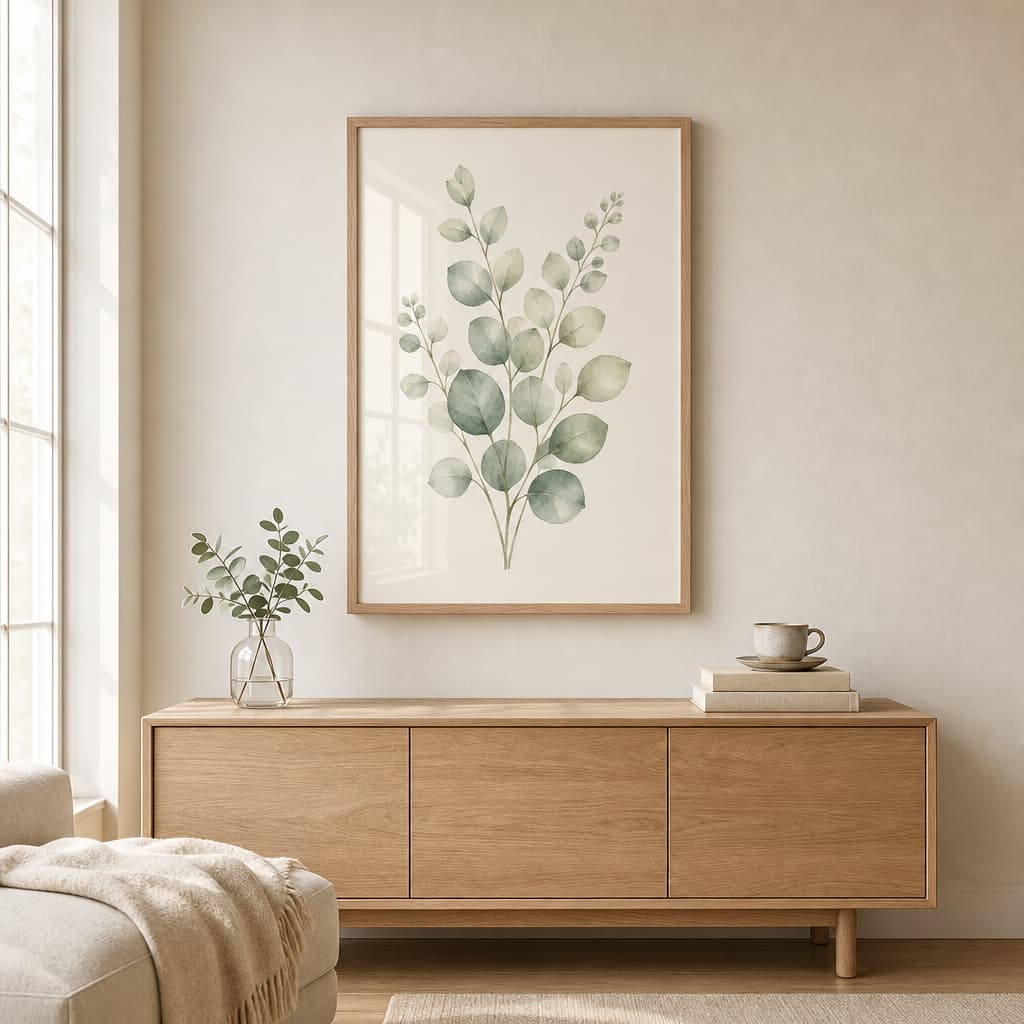
Eucalyptus Stem Framed Botanical Wall Art — Minimalist Watercolor
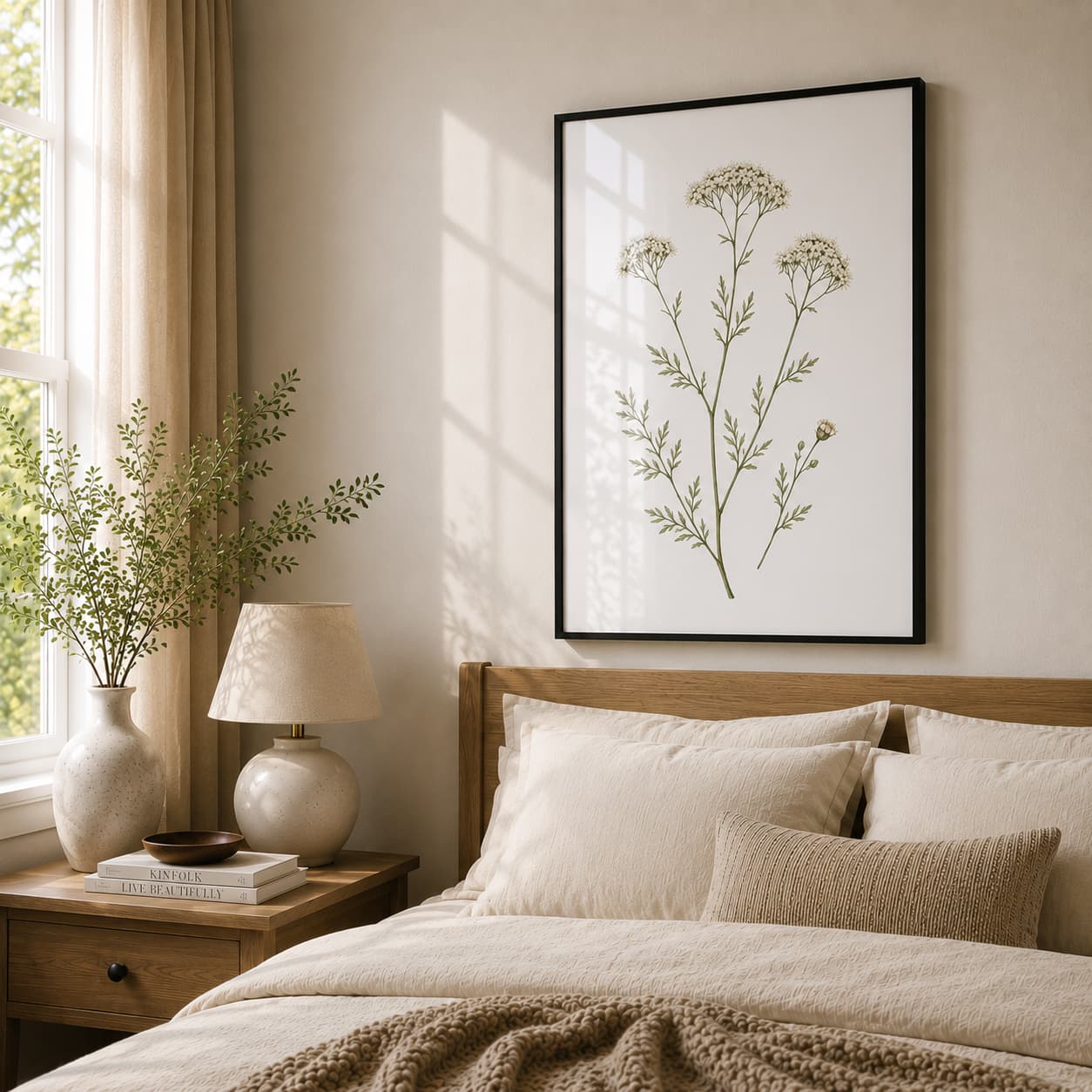
White Yarrow Botanical Framed Wall Art – Minimalist Wildflower Illustration on White Background
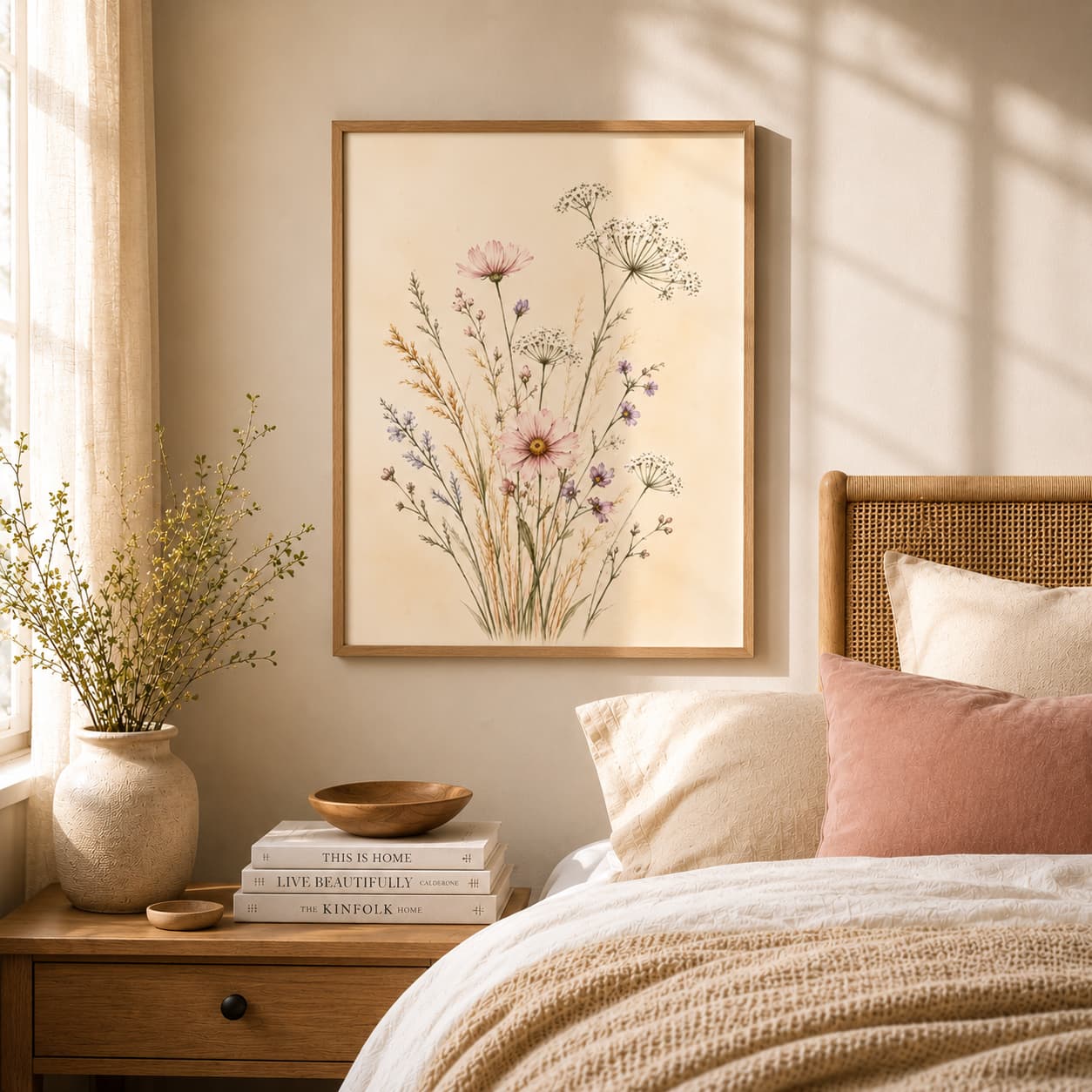
Soft Botanical Wildflower Framed Wall Art – Elegant Neutral Floral Art for Calm Interiors
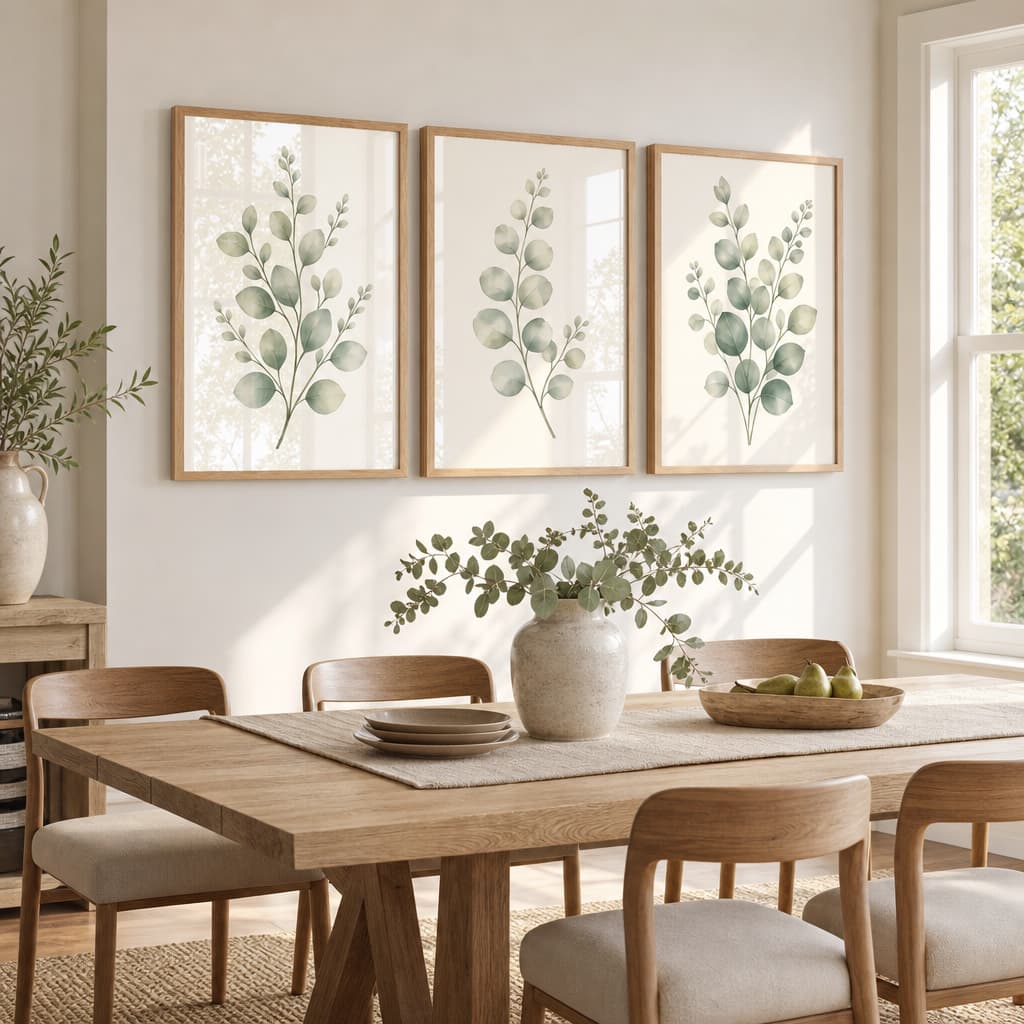 Set of 3