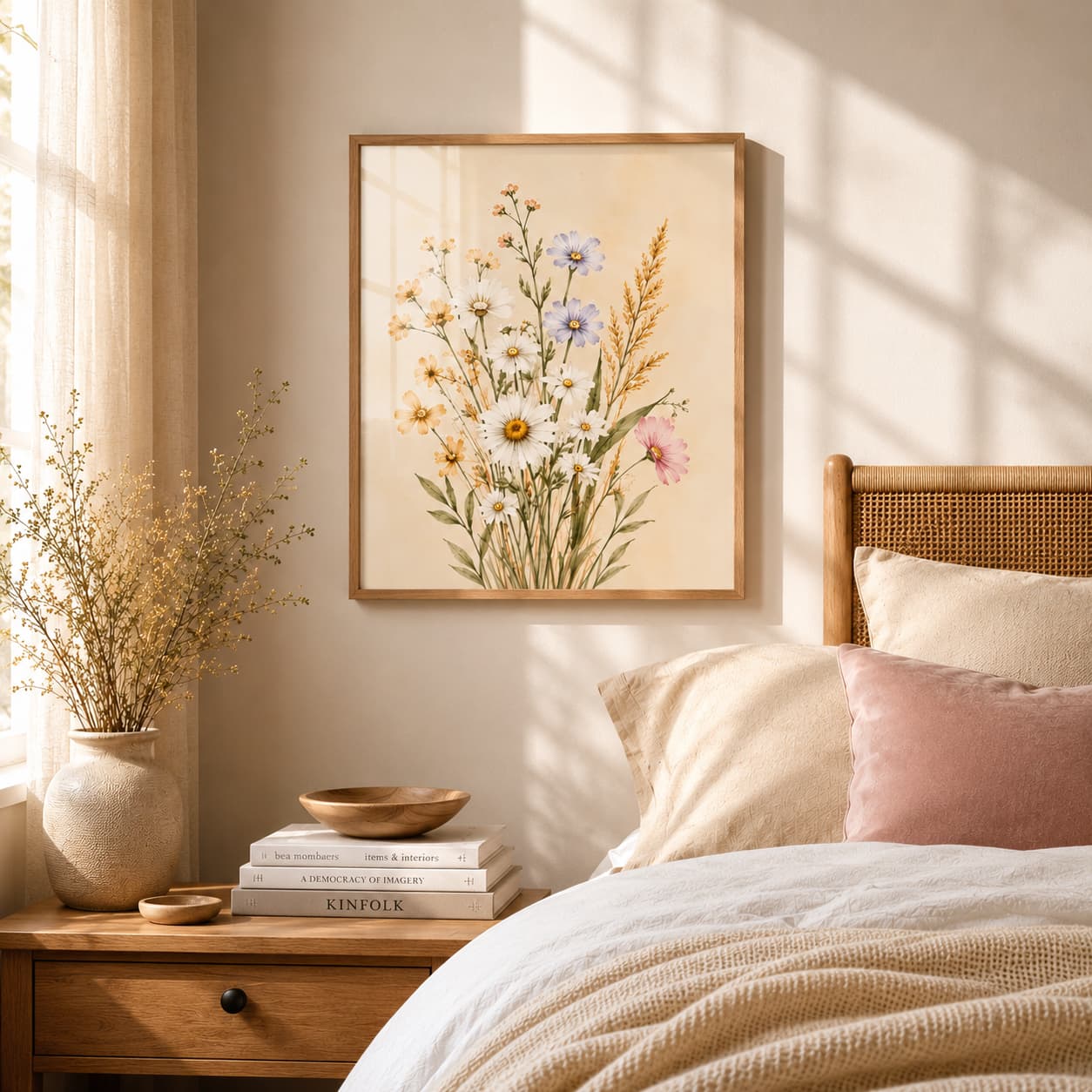
Prints vs Original Botanical Art: Which to Buy

Modern interiors are undergoing a fundamental transformation. The sterile minimalism and cool gray palettes that dominated early-2010s design are being replaced by warmer, biophilic environments that prioritize psychological restoration, natural materials, and visual calm. This shift is strongly influenced by the principles of biophilic design, which emphasize the human need for connection with nature in built spaces.
Within this movement, botanical wall art has emerged as a critical design element. But a key question confronts collectors, homeowners, and interior designers alike: Should you invest in original botanical paintings, or are premium fine art prints the smarter choice?
The answer is not about budget alone. It involves material science, visual neuroscience, spatial mathematics, and long-term value.
The Material Reality of Original Botanical Paintings
Original botanical paintings are singular physical artifacts. Each brushstroke, pigment layer, and surface irregularity creates a three-dimensional relief that interacts dynamically with light. Unlike flat reproductions, originals generate micro-shadows that shift with viewing angle and ambient illumination, giving the artwork a living presence within a room.
From an optical standpoint, this depth alters how the human brain processes visual information, increasing engagement time and perceived richness. However, originals demand controlled environments—stable humidity, limited UV exposure, and specialized conservation framing. Their scarcity also drives prices upward, often starting in the several-hundred-dollar range and escalating quickly.
Originals are assets first and decor second.
The Engineering Behind Premium Fine Art Prints
High-quality botanical prints are not posters. Professional fine art reproductions rely on the giclée printing process, which uses pigment-based inks and archival substrates engineered for longevity.
Modern giclée prints can achieve exceptional detail resolution, preserving delicate leaf veins, watercolor gradients, and botanical morphology with scientific accuracy. When printed on acid-free, archival paper and protected behind UV-filtering acrylic, these prints can maintain color integrity for 75 to 100+ years under normal indoor conditions.
This is not compromise—it is precision.
Paper vs. Canvas: Why Substrate Choice Matters
Canvas prints introduce a woven texture that diffuses light and mimics traditional paintings, making them suitable for bold, expressive compositions. However, that texture slightly softens fine details.
For botanical art—where line sharpness and color fidelity are paramount—archival paper substrates outperform canvas. ArtoLeaf’s use of premium luster paper strikes a calculated balance between matte and gloss, minimizing glare while maximizing ink density and tonal accuracy.
This aligns with best practices outlined by institutions such as the Smithsonian Museum Conservation Institute regarding paper-based artwork preservation.
Visual Neuroscience: Why Botanical Art Feels Restorative
The human visual system is most relaxed when processing green wavelengths, peaking around 555 nm. This physiological reality explains why botanical art reduces visual fatigue and supports parasympathetic nervous system activation.
Natural wood frames further amplify this effect. Research in environmental psychology shows that exposure to natural wood textures lowers stress markers due to their fractal geometry—a phenomenon well documented in studies summarized by Terrapin Bright Green.
In contrast, black frames heighten figure-ground separation, increasing contrast and visual focus, while white frames promote spatial continuity and “soft fascination,” a concept rooted in Attention Restoration Theory.
Strategic Curation: Originals and Prints Are Not Opposites
Here’s the blind spot many buyers fall into: treating originals and prints as mutually exclusive choices.
Professional designers don’t do this.
Original works are best reserved for high-impact focal points—living room anchors, fireplaces, or statement walls. Premium botanical prints excel in transition zones, offices, hallways, and bedrooms where calm, precision, and repeatable scale matter more than uniqueness.
This hybrid model maximizes visual depth, budget efficiency, and long-term flexibility.
The Bottom Line
Choosing between original botanical paintings and fine art prints is not about prestige—it’s about using the right material for the right spatial function. Originals deliver tactile presence and investment value. Premium prints deliver precision, consistency, and accessibility.
When curated intelligently, both work together to transform interiors into restorative, nature-aligned environments.
Featured Archival Prints & Gallery Canvases
Explore museum-grade giclée luster prints and hand-stretched gallery wrapped canvases.
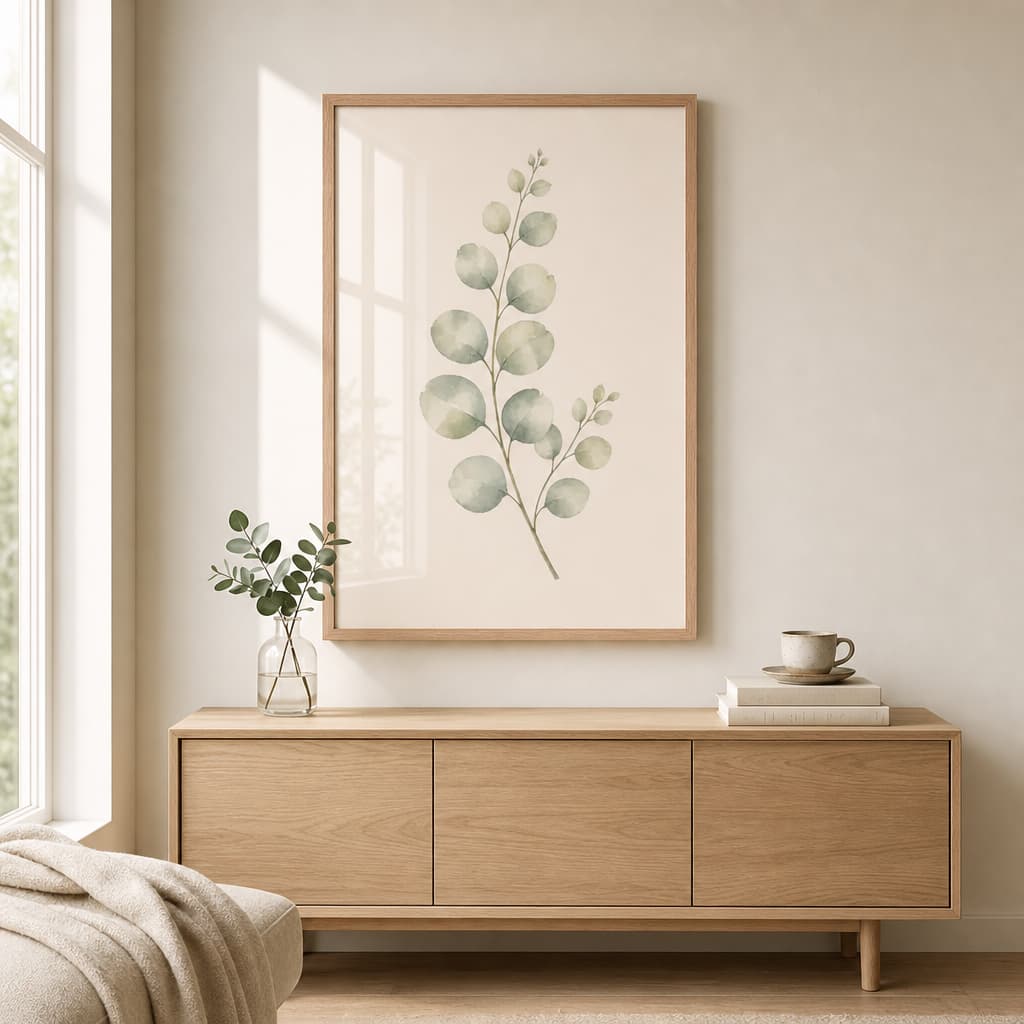
Eucalyptus Branch Framed Botanical Wall Art — Minimalist Watercolor
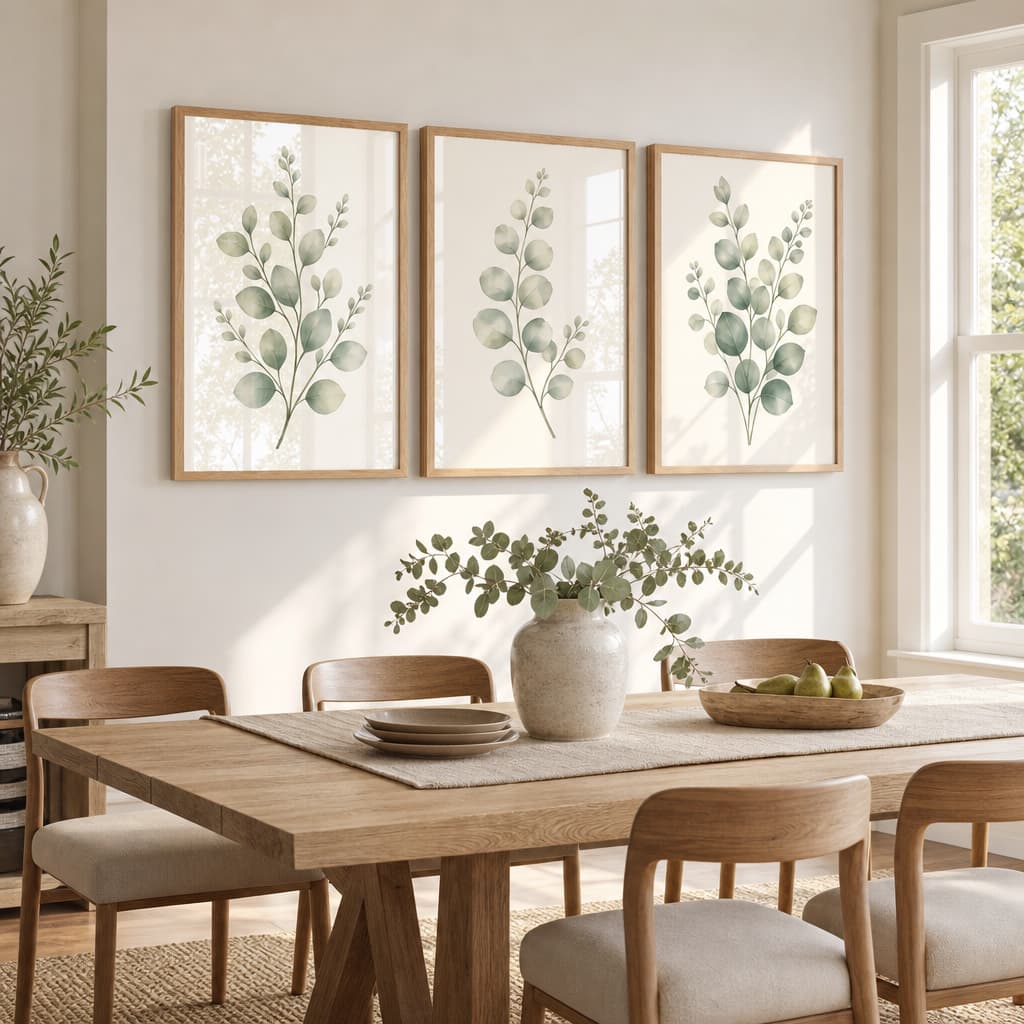 Set of 3
Eucalyptus Botanical Framed Wall Art Set of 3 — Minimalist Watercolor Collection
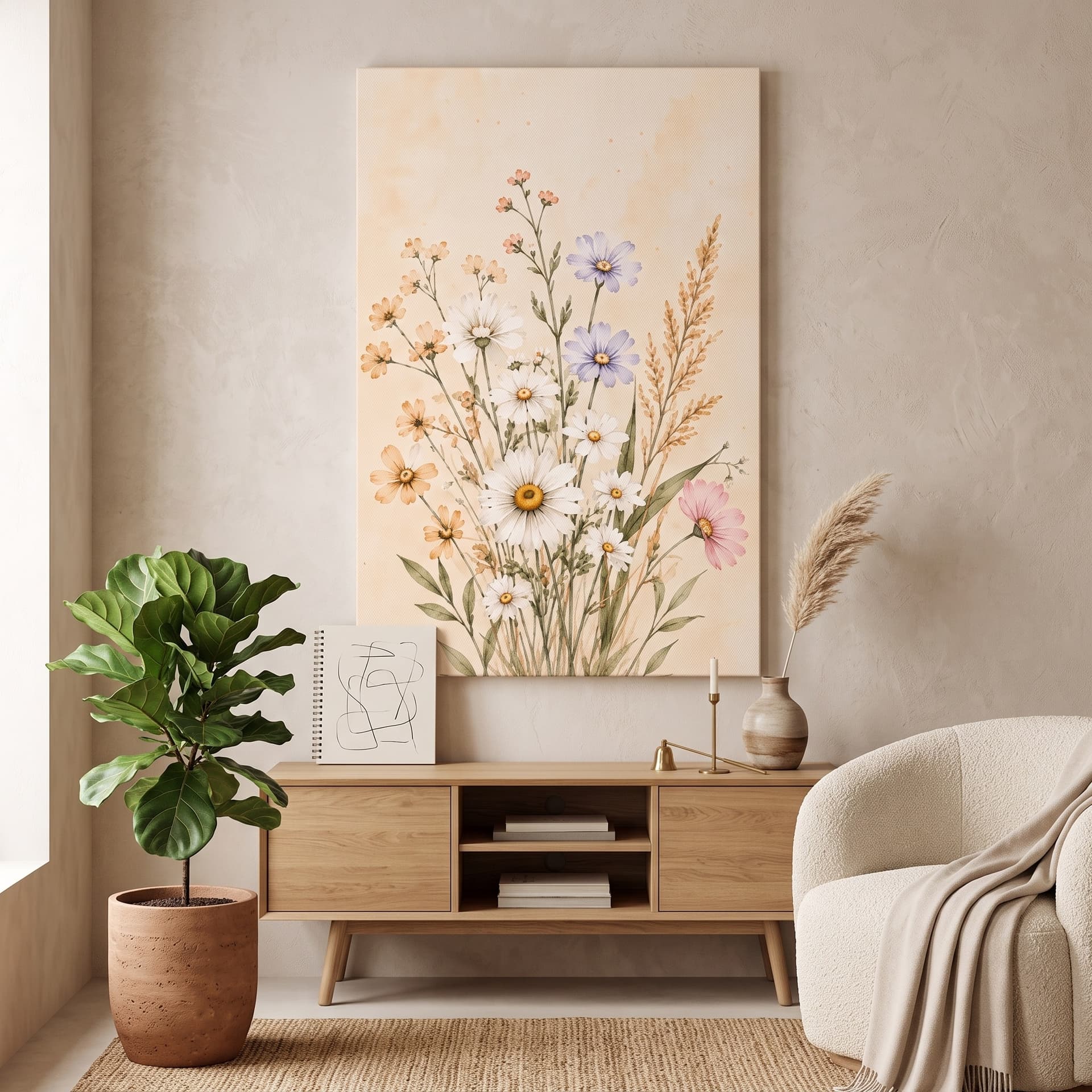
Minimalist Wildflower Canvas Wall Art – Airy Neutral Botanical Print